Price list
testing packages

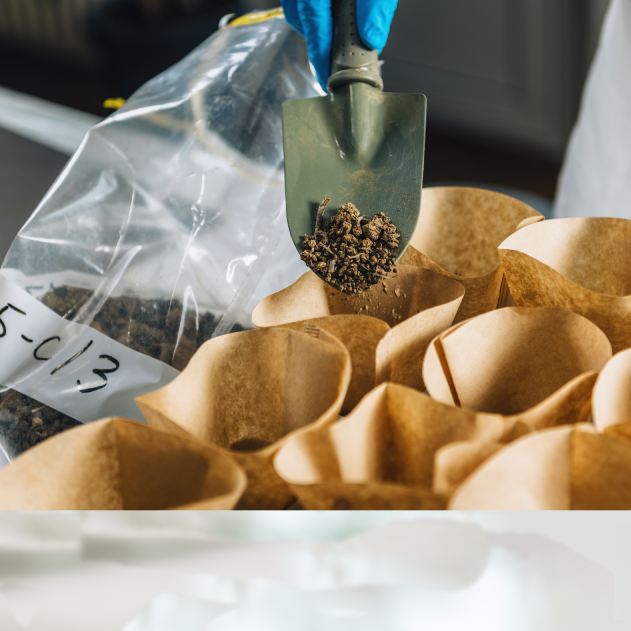
 Soil quality is essential to human health and the environment
 Agrochemical soil analysis is a fundamental tool for efficient crop production. This analysis provides an accurate assessment of the soil’s chemical composition and fertility, which is essential for selecting suitable crops and determining the required fertilisers.
Stages  Cost of analysis
 The cost of the service depends on the number of parameters you would like to test or on the package you select. For detailed pricing information, please refer to our price list or contact our manager for a consultation.
Instructions 
The process of growing agricultural crops is complex and requires careful attention to detail. One of the key stages is fertiliser application. Although soils in Ukraine contain many nutrients, after each harvest they lose a certain amount of nutrient compounds and components. This affects the growth of crops planted on the same land afterwards.
This is why it is important to monitor the content of essential substances in the soil of farms and other agricultural enterprises. Certain visual signs of micronutrient deficiency can be observed during plant inspection. However, laboratory soil analysis helps to accurately determine productivity indicators and identify the absence or deficiency of specific substances. The agricultural laboratory MicroBio Laba can support this process as a reliable partner.
Chemical analysis is a multi-component process. It includes targeted testing and other laboratory procedures. Such studies are highly important for farmers, as they provide information on the condition and quality of the soil. Importantly, the laboratory provides accurate test results that can serve as a basis for selecting fertilisers.
This makes agrochemical soil analysis an important part of a rational and effective approach in agronomy. In particular, testing the chemical composition of soil helps support high crop yields while also optimising costs. By receiving accurate data on nutrient deficiencies, agricultural producers can allocate their budget only to the fertilisers that are actually required. This helps optimise expenses and achieve the desired yield indicators.
The process involves laboratory testing of the samples provided by the client. For this reason, clients need to submit a small amount of soil and specify their request. Soil chemical composition analysis is performed using modern equipment, high-quality reagents and internationally recognised methods.
It allows the laboratory to determine all the parameters required to assess soil fertility. These include the content of micro- and macronutrients, as well as salinity, acidity and other characteristics. All procedures are carried out under the careful supervision of experienced MicroBio Laba specialists. After consultation, each client agrees on the number and type of tests required. The manager clarifies all details related to the land plot and business needs, calculates the price and answers any relevant questions.
In essence, agrochemical testing is soil fertility analysis. This means that measurements are carried out to assess the current condition of the soil and determine whether the land has the potential to produce the desired crop yield. More specifically, soil fertility analysis includes the determination of the following characteristics:
To receive detailed information about the services and their exact cost, please contact a manager. They will explain the available services, help select the required types of testing and provide useful recommendations.
Studies of soil composition and condition can be performed in any season. The need for such services may depend on the activity and frequency of fertiliser application, the specific use of the land plot and the crop rotation schedule. Each of these factors can cause significant changes in the ratio of substances and in the overall composition of the soil. Agrochemical soil fertility analysis is most often requested in the following cases:
In the second case, testing is usually prompted by visible signs of nutrient deficiency. These may include changes in plant appearance, such as slower stem development, leaf discolouration and similar symptoms. Importantly, soil samples can be collected at any time of year.
MicroBio Laba is a multidisciplinary institution that includes microbiological and physicochemical departments. These departments perform different types of testing. Some of them are described below.
This type of testing makes it possible to determine which elements are present in the soil. These include micro- and macronutrients, organic components and other substances. Based on the results, clients receive accurate parameters that help them select the fertilisers required to restore the nutrient balance of the land plot.
This is a separate type of testing designed to determine the quantity of biological components. These include bacteria, algae, fungi, viruses and protozoa. Each of these components may affect the crop growing process, which makes this testing important for agricultural producers as well. More detailed information about microbiological testing is available on the Sanitary condition of soil page.
Laboratory soil analysis is a process carried out in several stages. The first stage is sample collection. It is performed by experienced specialists according to individual requirements to ensure the most accurate result possible.
Usually, a small amount of soil should be collected from the outer points of the land plot and from its centre. The material is then delivered to the laboratory in fabric bags. The specialists perform the analysis according to the client’s request. After testing, they prepare a test report containing the results.
The cost of services is available in our price list. However, the final price may depend on additional factors. For example, when testing a large number of samples or when samples are collected by the client independently, the service cost may be lower. To find out the exact amount, please contact a manager for consultation.
The need to carry out soil analysis may arise for various reasons. However, the main purpose of such testing is to assess productivity. If a deficiency of nutrient elements is identified, fertilisers should be applied. Agrochemical analysis helps determine which types of fertilisers should be added and in what quantity.
Ordering soil analysis from a laboratory is relevant for those who want to create the most favourable conditions for achieving a high yield. The procedure is suitable for any farm with cultivated land and a need to assess the condition of a land plot. In addition, the service helps implement a widely used approach in crop production based on applying only the minimum necessary fertiliser rates.
Learn more It is best to collect samples for testing before sowing begins and before fertilisers have been applied. At this stage, the actual condition of the land plot can be assessed and the concentration of elements in the soil can be determined.
When preparing samples, please follow the specialists’ recommendations. The samples should be placed in fabric bags and submitted in a convenient way. They can be delivered to the laboratory in person or sent by post.
The timeframe may vary depending on several factors: the number of samples, the complexity of the testing and the current workload of the specialists. The exact time for receiving the results will be confirmed by the manager.
On average, specialists recommend carrying out soil testing approximately once a year. If the cropping intensity on the land plot is low, the service may be required less frequently - for example, once every 3-5 years.