Soil degradation: causes, consequences and mitigation methods
Agricultural producers often face worrying symptoms in the field: plant leaves unexpectedly turn yellow and fall, crop development slows down, and fruit quality deteriorates significantly. These signs often indicate that land degradation is progressing on the site.
To avoid guessing whether the cause is soil depletion or whether diseases and pests have affected the crop, accurate data are required. Our modern agricultural laboratory can carry out testing to show the actual condition of the fertile topsoil layer and its key parameters.
What is soil degradation?
To solve or prevent the problem, it is first necessary to understand what it involves. By its nature, soil degradation is the gradual deterioration of the beneficial properties of fertile soil layers, leading to a loss of their functionality.
This does not happen instantly. During soil degradation, the structure is damaged first, the natural exchange of substances is disrupted, and the soil’s ability to allow air movement and retain moisture decreases. Once the balance is disturbed, plants switch into survival mode, which automatically reduces the chances of achieving a high yield.
Soil degradation: causes
The influencing factors may be either natural or the result of agricultural activity. Most often, soil degradation is caused by erosion, when wind or water literally removes the fertile layer.
Excessive salinisation or acidification are also critical factors, as they make nutrients unavailable to the root system. A decrease in organic matter, including humus, and soil compaction caused by machinery only accelerate these negative scenarios.
Types of soil degradation
For effective mitigation, it is important to understand which specific type of damage to the fertile layers is taking place. In general, soil degradation is a complex phenomenon divided into several types:
- structural compaction;
- acidification, including changes in pH;
- salinisation, meaning a significant increase in salt content that inhibits growth;
- contamination, with an increase in harmful substances;
- reduction of organic components, including the loss of beneficial microorganisms;
- erosion-related degradation, involving the destruction of soil structure.
Soil degradation progresses fastest when anthropogenic pressure is combined with aggressive natural factors, as in such cases the land loses its productive capacity many times more quickly.
Consequences of land degradation
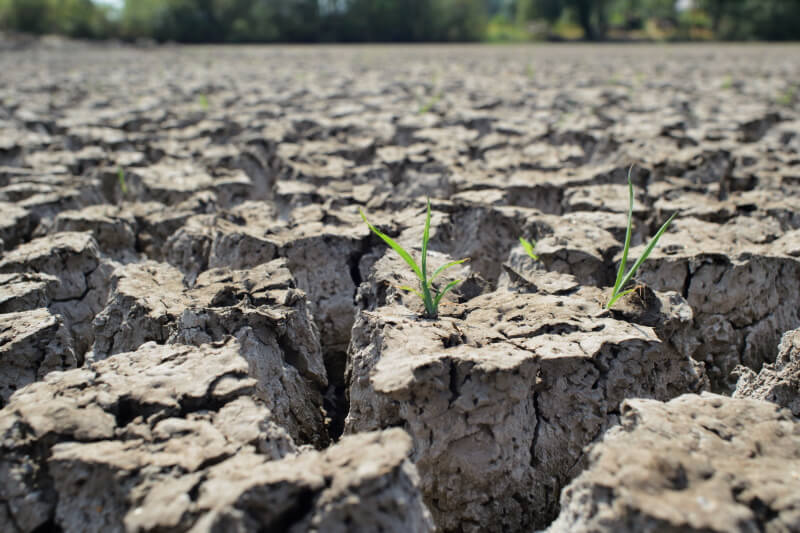
This problem must not be ignored. Otherwise, degraded soils may eventually become completely unsuitable for agriculture. In addition to a direct decline in yield, desertification processes may begin, and the condition of groundwater may deteriorate. For an agribusiness owner, this means not only direct losses today, but also significant future costs for land reclamation. Restoring land productivity is much more difficult than maintaining it.
How to detect soil degradation on a site in time
Changes can be identified in several ways. The first and simplest method is visual observation. If you notice a hard surface crust, a clearly visible white salt deposit, or characteristic yellowing of plants in the crop stand, there is a high probability of depletion.
However, visual observations alone are not enough to stop soil depletion, as they do not answer the question of what exactly is lacking. In addition, without sufficient expertise, soil degradation can be confused with other problems.
That is why professional agrochemical soil analysis in a laboratory should be considered. It makes it possible to accurately determine the level of microelements, organic matter content and the degree of contamination. Only on the basis of these data can an effective foundation for restoration be developed.
Main methods and approaches for restoring degraded soils
To prevent land resource degradation from spreading and to gradually restore soil function, a comprehensive set of measures is required:
- agrotechnical measures, including crop rotation, green manure crops and mulching;
- land improvement measures, including drainage and irrigation.
A proper strategy may also include neutralising acidity through liming or applying the necessary biological products to restore microbial activity. In the long term, only rational solutions and continuous monitoring can help ensure that soil degradation does not turn your assets into unproductive land.
How to stop depletion of the land resource
Minimising degradation processes requires a systematic approach. First of all, the problem must be identified under laboratory conditions. The specialists at MicroBio Laba can accurately determine whether soil depletion is indeed present or whether another issue is involved.
If depletion is confirmed, the priority should be to implement a professional land-use strategy that defines clear regulations and standards for the careful use of agricultural land. At the same time, it is important to establish a monitoring system for prompt control of soil quality indicators and the ecological condition of soils.