What is humus: composition and its effect on soil fertility
For successful crop production, agricultural businesses need to consider all factors that affect plant development. One of the key factors is soil condition.
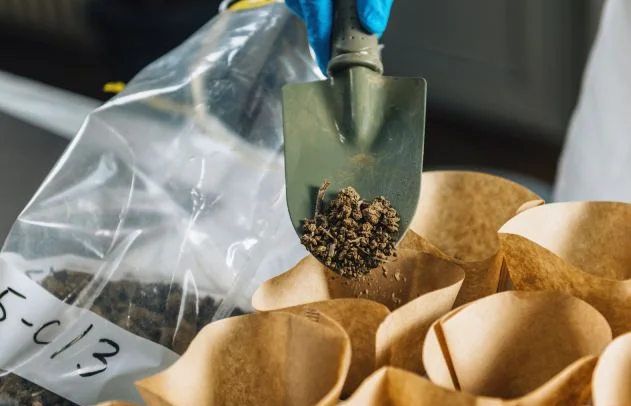
If the humus layer gradually decreases, yield and product quality will also decline over time. These problems can be prevented or reduced if accurate soil chemical analysis is carried out in time through professional laboratory testing. First, however, it is important to understand where beneficial elements are concentrated and how the most valuable soil layer — humus — is formed.
What is humus?
Many agricultural producers confuse humic matter with compost, but these are different concepts. Compost is a mixture of plant and animal residues. It may include leaves, grass, food waste and manure.
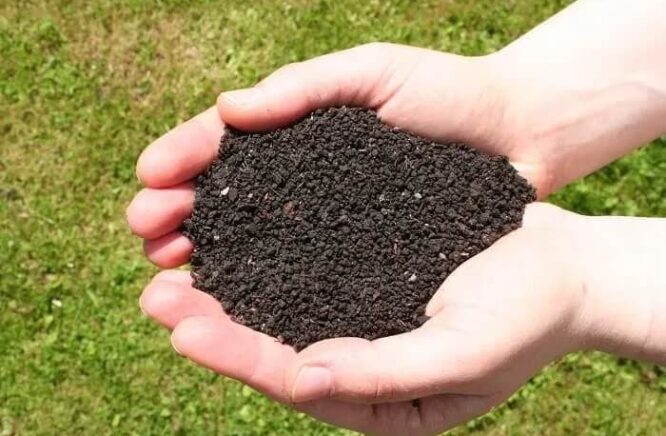
Humus is the final stable product, often referred to as well-decomposed organic matter, formed as a result of the complete decomposition of organic material. Soil microorganisms, fungi, bacteria and small invertebrates take part in its formation. They transform compost into a stable dark substance.
Which soils contain the most humus?
Agricultural producers often use the term “humus-rich soil”. This is no coincidence, as humus content can vary depending on the soil type. Soils with a high percentage of humus are referred to as humus-rich soils. They provide plants with the best nutrient supply and create favourable conditions for nutrient uptake and moisture retention.
The highest amount of soil humus is found in chernozems. Humus content may reach 10-12%. Chernozems form in temperate climates with sufficient moisture, most often under steppe grass vegetation or in deciduous forests. In these conditions, microorganisms actively decompose fallen leaves and roots. A high humus content is also observed in chestnut soils and meadow-chernozem soils.
What is humus composed of?
This layer is formed from different substances that ultimately support plant nutrition. Soil humus includes:
- Humins. Water-insoluble fractions that give soil its characteristic dark colour. Their role is to provide a basis for the formation of stable compounds.
- Humic acids. The most stable and largest organic fraction. They improve soil structure, water and air permeability, and the ability to retain nutrients.
- Fulvic acids. Soluble organic compounds of particular importance. They move easily through the soil and help deliver nutrients to plant roots.
Humus in soil also contains non-humic components. These include lignin, carbohydrates, fats and proteins, which serve as an energy source for soil microflora.
Why is humus so important?
Soil rich in humic matter creates favourable conditions for crop growth due to a number of properties:
- It retains moisture effectively, helping plants withstand dry periods.
- It forms a loose, crumbly granular structure, ensuring free access of air and water to the roots.
- It gradually releases nutrients, supporting balanced nutrition throughout the season.
- It supports healthy microflora, which can help suppress pests and pathogens.
In addition, humus-rich soil provides a strong foundation for growing produce with natural flavour, improved nutritional characteristics and a longer storage life.
How is humus formed?
Humus is formed mainly from plant residues. The main natural sources include:
- Fallen leaves and needles in forests.
- Dead roots of herbaceous plants in steppes and meadows.
- Decayed tree trunks and branches.
The process takes years, and sometimes decades, under the influence of microorganisms in conditions of sufficient moisture and aeration.
How can you produce humus yourself?
Once you understand what soil humus is, it becomes possible to produce it on your own site through composting. Any decomposable organic materials are suitable: fallen leaves, cut grass, weeds without seeds and kitchen waste such as vegetable peelings and eggshells.
The materials are placed in layers in a compost heap or bin, alternating “green” components rich in nitrogen with “brown” components rich in carbon. The heap should be turned periodically to provide oxygen and should be kept moderately moist. After 6-18 months, mature compost or well-rotted organic matter is formed.
How to use humus to improve soil fertility
Understanding the value of humic matter shows how important humus-rich soils are for crop production. It is also important to understand how to apply well-rotted organic matter correctly, as soil fertility directly depends on this. Experts recommend following several guidelines:
- Before sowing or planting, distribute it evenly over the surface and then incorporate it into the soil, or add it directly to planting holes and furrows.
- Use it as mulch in a 5-10 cm layer. This helps retain moisture and gradually enriches the soil.
- Use an extract of mature compost or humus as part of liquid fertilisation. Such solutions are suitable for watering and spraying.
Therefore, we have examined what humus is formed from, how it affects fertility and how it can be applied. This knowledge helps not only to maintain high yield levels, but also to restore fertility when the amount of humus in the soil decreases.