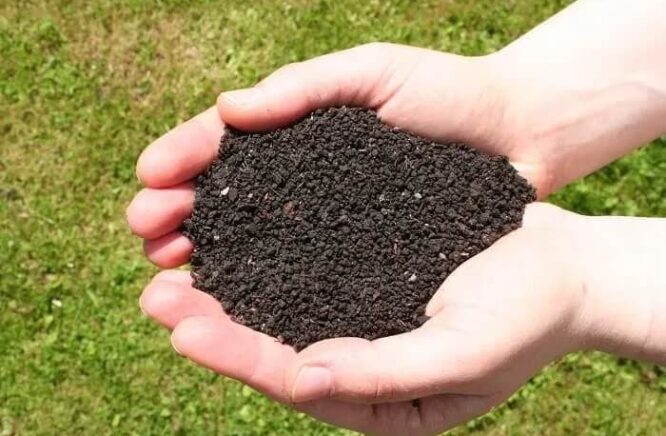

Soil sampling for chemical analysis: procedure, requirements and sample preparation
Every agricultural producer in Ukraine needs to monitor soil condition. Several key factors directly depend on it: the intensity of plant growth, the quality of the harvested produce, the speed and uniformity of emergence, and the final yield volume. If soil indicators deviate from the norm, corrective fertilisers or products may need to be applied.
But how can you determine accurately whether intervention is required? Soil sample collection and subsequent laboratory analysis can provide the answer. This service is carried out by our agricultural laboratory, MicroBio Laba. Our specialists use modern methods and reagents only.
What soil sampling methods are used for testing?
Several types of procedures are carried out in the laboratory. Regardless of their specific features, all of them have one purpose: to obtain average indicators that reflect the condition of the site as a whole.
Most often, soil sampling is carried out using the “envelope” method. This involves collecting material from four corner points of the field and one central point. This ensures that samples are taken across the entire area. A special tool that easily penetrates the soil is used for the procedure. If crops are present, the sampling depth corresponds to the arable layer.
When should soil sampling be carried out?
This service may be relevant at different stages of the agricultural cycle. Most often, soil samples for laboratory testing are collected in autumn. This is necessary to determine fertility indicators.
Soil sampling can also be carried out in spring. The procedure makes it possible to monitor the content of mineral nitrogen and plant-available moisture in the one-metre soil layer.
Rules for soil sampling for chemical analysis
To obtain an accurate result, samples for physicochemical analysis must be collected correctly. The procedure begins with marking sampling points along the diagonals of the site. This forms a specific “envelope” pattern.
The method used for soil sampling for laboratory testing involves collecting material from the corner points and the centre. During the process, several key rules should be followed:
- First, vegetation and turf are carefully removed from the sampling point with a small spade or trowel.
- Soil is removed from the surface of the tool with a bottom-to-top movement.
- All individual portions are thoroughly mixed to form one composite sample.
- The prepared soil sample is placed in a clean cloth or paper bag with a label.
The label should include all necessary information: plot number, crop, sampling date and other relevant data. To ensure that soil analysis is accurate, avoid sampling near fertiliser storage areas, roads or other potential sources of contamination.
Required tools
Regardless of the method used for soil sampling for physicochemical testing, equipment is required to collect a sufficient volume of soil. An auger or soil probe is most commonly used. The second option is optimal for loose, dry and dusty fields.
Soil sampling with an auger is mainly used on dense soils. It is suitable for stony, compacted or slightly frozen layers. For deeper layers, hydraulic or mechanical samplers are sometimes used. If these are not available, an ordinary spade, scoop or garden trowel may be sufficient.
How to prepare soil samples for analysis
Sampling is only the initial stage. Next, according to the laboratory’s recommendations, the sample must be prepared correctly:
- reduce the volume to the required amount;
- break up soil clods;
- mix the sample evenly.
In addition, the sample should be spread in a thin layer on a clean sheet of paper, with foreign inclusions removed manually. These may include roots, stones, plant residues and other debris.
How to send soil samples to the laboratory
The process is straightforward. Follow several recommendations:
- use a spade or auger;
- the optimal sampling area is 2-3 ha for land subject to irrigation or drainage, 5-10 ha for land with different parent materials in the forest-steppe and steppe zones, and 15-20 ha for land in the steppe and forest-steppe zones with homogeneous parent materials;
- carry out sampling by moving within a square in a zigzag pattern or along a diagonal;
- collect at least 10 samples from the site;
- take samples from a layer up to 30 cm deep;
- send the samples as quickly as possible.
After soil sampling has been completed, the samples should be transferred into cloth bags or other packaging recommended by the laboratory. Strict compliance with the laboratory specialists’ instructions helps ensure the reliability of the future analysis. The material can be delivered to MicroBio Laba by post or in person.