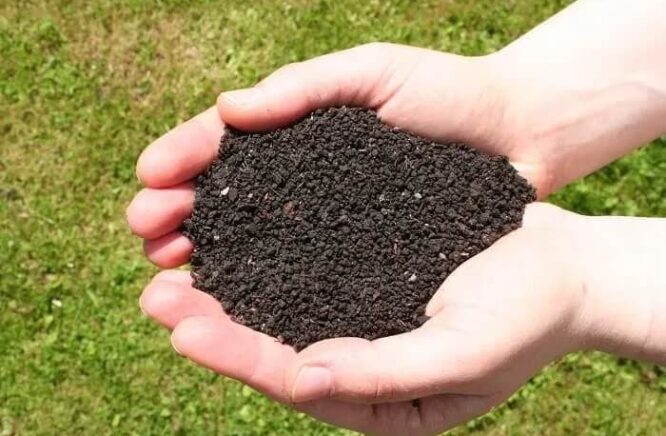

Types of soil: key characteristics, properties and classifications
The condition of soils on agricultural land is one of the key factors that directly affects plant nutrition and, consequently, the quality and volume of the harvest. That is why every agricultural producer should regularly assess this indicator — not only visually, but also using specialised equipment.
However, to understand test results correctly, it is important to know which soil types occur in Ukraine and what specific features each of them has. In this article, we have prepared useful information about the main soil varieties, their characteristics, advantages and limitations. We will also explain why regular soil analysis in a specialised laboratory is essential for effective farming.
Main soil varieties in Ukraine
Ukraine has several different soil varieties. If you are an agricultural producer and want to achieve high yields, it is important to understand their properties. Below, we look at the main soil varieties included in the generally accepted classification.
Clay soils
Clay soils have a dense and sticky texture. When there is excess moisture, the surface becomes waterlogged and compacted; during drought, it cracks. Oxygen reaches the roots poorly, and clods form during cultivation. However, these soils retain moisture and nutrients well, which is a significant advantage.
Sandy soils
These soil varieties contain a high proportion of sand, which means that nutrients are quickly leached by rainfall. The humus content in such soils is quite low, usually from 0.3% to 2%. Due to their poor nutrient status, sandy soils are poorly suited to intensive farming without substantial fertiliser application.
Peaty wetland soils
These soils are characterised by excessive moisture, a sponge-like structure, good aeration and a high content of organic matter containing nitrogen compounds. At the same time, critically low levels of phosphorus and potassium require the mandatory application of appropriate fertilisers.
Sandy loam soils
When considering these soil varieties and their properties, sandy loam soils have better agronomic characteristics for crop production than sandy soils:
- higher humus content;
- better water and air permeability.
Another advantage is their loose structure. They warm up quickly in spring, providing a favourable temperature regime for the root system. Their composition includes valuable minerals that support plant development.
Loamy soils
Loamy soils combine the positive properties of sandy and clay soils. For agricultural producers, it is important that they warm up well, retain heat and have a granular structure with fine silt particles. However, the main advantage of these soils is their sufficient humus content. In addition, loamy soils have acidity levels close to the optimal range for high yields. This makes it possible to grow a wide range of agricultural crops.
Calcareous soils
These soils are easy to identify visually. They have a greyish shade caused by a high concentration of carbonates. Their structure is loose and crumbly, with many small stones of different sizes.
Main soil types in Ukraine
The classification also includes division into different soil types. The table below presents the most common groups.
| Soil name | Soil properties |
| Chestnut soils | Typical of steppe zones with insufficient moisture and sparse vegetation. They require irrigation and nitrogen fertiliser application. The humus horizon is relatively deep, up to 55 cm, but the humus content is low and usually does not exceed 3%. |
| Grey forest soils | These soil types form under broad-leaved forests on loamy parent materials. They are common in southern Polissia, western Ukraine and the Right-Bank region. Humus content does not exceed 3%, so fertility is moderate. They require systematic fertilisation for effective use. |
| Sod-podzolic soils | These soil types in Ukraine form under mixed and coniferous forests in conditions of excessive moisture, mainly in Polissia. Humus content is low, up to 1.5%. Nutrients are easily leached due to the presence of a podzolic horizon. Fertility is limited. Periodic liming is required, along with the application of organic and mineral fertilisers. |
| Chernozems | The main characteristic of this soil type is its high fertility. Humus content is high, at 8-15%, and the humus layer reaches 0.4-1 m or more. The structure is granular and crumbly, making these soils suitable for growing most crops. Chernozems are widespread in the forest-steppe and steppe zones. They currently cover 61-64% of Ukraine’s territory. |
How can you determine the soil type in your field?
A preliminary assessment can be made based on colour, structure, texture and region. However, these visual signs do not provide a complete picture of nutrient content, acidity or the presence of toxic substances.
Accurate determination of soil types and their properties is possible through particle size distribution analysis, carried out by an agricultural laboratory using modern equipment. This analysis is aimed at determining the exact soil texture according to international classification, including the percentage of sand, silt and clay. Based on these results, an agricultural producer can accurately calculate fertiliser application rates, liming requirements and other agrotechnical measures, ensuring maximum return from every hectare.